The Birth of Iraqi PEN International in 2007
 Between the Dream of Iraqi Culture and the Ruins of an Era. Amal Al-jubouri
In 2007, while Baghdad was sinking into one of the bloodiest and most turbulent periods in its modern history, the idea of establishing an Iraqi branch of PEN International seemed to many an almost impossible dream. Iraq at that time was not merely experiencing a political or security crisis; it was undergoing a comprehensive collapse that affected the state, society, culture, and the human being alike. Iraqi intellectuals were being kidnapped, assassinated, and displaced, while the country itself was gradually transforming into an open landscape of fear, devastation, and mutual accusations.
It was in that harsh historical moment that I began working on the project of founding the Iraqi PEN Association—not as a symbolic institution, but as an attempt to rescue the Iraqi voice from isolation, reconnect it with the international cultural sphere, and restore the dignity of the Iraqi writer as a witness to catastrophe rather than merely one of its forgotten victims.
For an entire year, I worked on organizing a founding conference that would gather Iraqi writers who were able to reach Damascus at a time when Baghdad itself was groaning under the weight of sectarian violence. Even travel between Iraqi cities had become a journey through death; travelling abroad was infinitely more difficult. Nevertheless, a number of Iraqi poets and writers managed to attend, and their presence alone represented a moral and cultural achievement under such conditions.
I personally financed most of the conference expenses, including organization, documentation, accommodation, and logistical arrangements, out of my conviction that Iraq needed an independent cultural institution capable of representing its writers internationally. Yet many of those who attended believed that all these efforts were simply preparation for my own candidacy for the presidency of the association.
The Damascus conference resulted in the election of the poet علي الشلاه as President of the Iraqi PEN Association, حميد المختار as Secretary-General, and the poet حميد قاسم as General Secretary. As for myself, I refused to nominate myself for any leadership position, a decision that surprised many participants.
I still remember what the poet ماجد الشرع told me afterward. He said that he had travelled from Najaf fully expecting to vote for me because he assumed that no one would bear such enormous financial and organizational burdens without aspiring to a leadership role. Likewise, the critic and academic محمد صابر عبيد remarked after the elections and my refusal to stand as a candidate: “Today Amal has taught us a lesson in integrity,” referring to the fact that I had stood behind all those efforts without seeking a position or personal gain.
Yet the Iraqi cultural scene, like the political scene itself, was far from free of conflict, suspicion, and defamation. Some of those who had not been invited to the conference launched personal attacks against me that went far beyond criticism of my cultural work. They targeted my honour and family life in ways that even some foreign observers described as unworthy of anyone claiming to defend freedom and culture.
I remember that the Secretary-General of PEN International at the time, a Norwegian named Eugeni, told me that he had been throwing the defamatory messages he received about me directly into the rubbish bin, and that he had personally asked the sender to stop writing such accusations to the organization.
At the same time, suspicions began to circulate around PEN International itself through attempts to associate it with Israel on the grounds that an Israeli PEN branch existed within the international organization. Ironically, one of the most vocal figures behind these accusations had himself been among the very first to raise his hand when nominations for the presidency of the Iraqi PEN branch were opened. At the time, he was also the President of the Iraqi Writers’ Union.
I also remember how I tried to push علي الشلاه forward as a candidate through subtle gestures that were immediately understood by the great Iraqi poet and human being يحيى السماوي, who raised Ali al-Shalah’s hand and declared: “We nominate al-Shalah.” Following a democratic vote, he was indeed elected President of the association.
However, one of the critics who failed to win any position later returned to Iraq and gave an interview to the journalist Hussein Younis in which he implied that I had distinguished between “honourable” and “dishonourable” resistance—a dangerous insinuation directed against me personally, especially at a time when any discussion of “resistance” in Iraq was directly associated by the Americans with insurgency and terrorism.
In reality, what I had spoken about during the conference was the role of the Iraqi intellectual in resisting occupation through culture and the written word rather than through violence. Yet the highly charged political atmosphere of the period allowed any statement to be distorted and transformed into a political or security accusation.
Later, I found myself compelled to publish an article under a title close to the phrase: “If memory has forgotten, the recordings still exist,” in response to the falsehoods circulated by a critic whom I had once regarded not only as a friend, but also as a respected teacher of literary criticism.
When I encountered him later at the al-Mirbad Poetry Festival in 2007, he approached me warmly and attempted to shake my hand. I refused. I told him in front of the attendees: how could someone who had incited others against me with false information now greet me with such intimacy? I described this behaviour as a form of moral schizophrenia that I could not accept.
The man swore before those present—many of whom are still alive today—that the statements published in al-Sabah newspaper had been fabricated by the journalist Hussein Younis. I asked him that, if he were sincere, he should publish a public retraction of everything written about me, especially the fabricated claims concerning events that had never occurred during the founding sessions of the Iraqi PEN conference. He promised to do so, but of course, he never did.
Afterwards, the Iraqi delegation travelled to Senegal to participate in the general congress of PEN International. The delegation consisted of Ali al-Shalah, Hamid al-Mukhtar, and myself, while Majid al-Shara‘ was unfortunately unable to join us due to visa complications.
Senegal was the first African country I experienced directly rather than through books or images. There I discovered the intimate details of everyday life: women washing clothes collectively in alleyways, ropes stretched between homes for drying garments, and an atmosphere that seemed, in some ways, outside modern time, yet profoundly alive and warm.
A Senegalese driver named Mokhtar accompanied us. He was overjoyed when he discovered that we were Iraqi. He began reciting the Qur’an melodically and then spoke, in a mixture of English and French, about his desire to travel to Iraq in order to “kill Americans” through a suicide operation.
Hamid al-Mukhtar interrupted him, asking: “And what about Iraqis? Would you kill Iraqis too?”
The man responded in astonishment: “Of course not. I would only kill Americans.”
The conversation continued between him and Hamid al-Mukhtar regarding the existence of Shi‘a Muslims in Senegal, while I found myself contemplating the strange contradiction through which Iraq had become, in the imagination of many people around the world, a symbol of war, resistance, and death.
At one point, the driver pointed to French military barracks, and we asked him: “Is that not also an occupation?”
He replied: “Nothing resembles the Americans.”
In the streets of Dakar, poverty was unmistakable, yet the people interacted with remarkable kindness. Beggars dressed in brightly coloured garments would address you as “my brother” if they knew you were Muslim, or “my friend” if you belonged to another faith. Senegalese visual art, meanwhile, revealed another universe altogether—one of vivid colours and overwhelming vitality.
I repeatedly asked the driver to stop so that I could contemplate the paintings displayed along the streets. I purchased many works after long negotiations, while my husband Adel laughed at my ignorance of bargaining and prices. With the help of the driver, we obtained more than nine paintings for a sum that did not exceed one hundred dollars.
During the congress sessions, participants spoke extensively about the importance of literature—and poetry in particular—in creating and restoring peace in the world, often claiming that literature could achieve more than diplomacy itself. They discussed the tragedies of Eritrea, China, Korea, and many other regions. Yet Iraq was barely mentioned at all, as though it had been erased from the map of human suffering.
At that moment, I could no longer remain silent. I took the microphone from the session moderator and said that I was astonished by the continued neglect of Iraq, despite the fact that it was considered the most dangerous place in the world in which to live and work. I stated that what was occurring there had surpassed ordinary warfare and approached something akin to genocide.
At the time, I used the expression “another Holocaust,” without fully understanding the sensitivity surrounding that term outside the specifically Jewish historical context.
I spoke about the killing of Iraqi writers and journalists, about kidnappings and torture, and about scenes I had personally witnessed in Basra, insisting that the Iraqi intellectual was paying a double price for the war.
After the session, the representative of American PEN told me that he was relieved finally to hear an Iraqi voice within the organization, while the Secretary-General, Joan, appeared visibly uncomfortable because my speech directly criticized American policy in Iraq.
However, the President of Danish PEN defended my right to distribute the paper I had prepared concerning the situation of Iraqi writers, arguing that knowledge of the truth should not depend upon whether Iraq had formally been accepted into the organization or not.
Despite attempts to reduce my speech to only two minutes, its impact was considerable. Many delegations stood and applauded Iraq and Iraqi writers for a long time.
As I was leaving the hall, one member of the American delegation approached me with tears in his eyes and said: “You were the voice of Iraq’s intellectuals. You conveyed to us what our country did to yours.”
Then came the moment of voting.
We entered the hall—Hamid al-Mukhtar, Ali al-Shalah, and myself—and Iraq’s acceptance into PEN International was announced unanimously.
I cried with joy that day.
I felt that Iraq, despite destruction and death, was still capable of existing in the world through its culture and its word.
During the discussion that followed, a representative of the Kurdish Writers’ Association objected that our speech had not mentioned Kurdish writers separately. Ali al-Shalah responded by stating that the phrase “Iraqi writers” included everyone regardless of ethnicity or identity, and that Kurdish writers already possessed their own internationally recognized PEN branch as well.
Yet, as had happened from the very beginning, this achievement did not pass without renewed campaigns of defamation, particularly against me personally. In Baghdad, during a symposium organized by the East–West Diwan Cultural Foundation—which I had established after 2003—the writer Zaeem al-Ta’i spoke openly about warnings he had received discouraging him from attending, after being told that the association was “suspicious” or connected to Israel.
Outside Iraq, meanwhile, some individuals associated with the Iraqi cultural sphere launched vicious attacks against me, employing accusations that represented, in truth, the very depths of moral degradation.
The Iraqi PEN Association continued its activities for several years afterward, although my ambitions were always far greater than what reality permitted. Many individuals benefited from the committees and international activities we established. Among them was the novelist علي بدر, who once told me in London that he had been the greatest beneficiary of his membership in the Writers in Prison Committee, through which he had been invited to Europe and America and had his works translated thanks to the association.
Later, however, the association itself entered a state of ambiguity and division, particularly after elections ceased and the President, Ali al-Shalah, failed to call for new ones. Eventually, a new alternative PEN association suddenly emerged.
Today, after all these years, I can say honestly that I feel a measure of regret—not regret for the dream itself, but because I exhausted my time, energy, and financial resources on collective cultural projects when I could instead have devoted all that effort to my own literary and creative work, as many poets and writers have done.
Nevertheless, the founding of the Iraqi PEN Association remains part of the history of modern Iraqi culture, with all its dreams, conflicts, disappointments, and personal sacrifices borne by generations of Iraqi intellectuals struggling to defend the meaning of the word in an age of devastation.
The Iraqi PEN Club: Writing Through Rupture
Defending the Word in Times of Silence
Defending the Word in Times of Silence
Historical Overview
Between the Dream of Iraqi Culture and the Ruins of an Era. Amal al-jubouri
In 2007, while Baghdad was sinking into one of the bloodiest and most turbulent periods in its modern history, the idea of establishing an Iraqi branch of PEN International seemed to many an almost impossible dream. Iraq at that time was not merely experiencing a political or security crisis; it was undergoing a comprehensive collapse that affected the state, society, culture, and the human being alike. Iraqi intellectuals were being kidnapped, assassinated, and displaced, while the country itself was gradually transforming into an open landscape of fear, devastation, and mutual accusations.
It was in that harsh historical moment that I began working on the project of founding the Iraqi PEN Association—not as a symbolic institution, but as an attempt to rescue the Iraqi voice from isolation, reconnect it with the international cultural sphere, and restore the dignity of the Iraqi writer as a witness to catastrophe rather than merely one of its forgotten victims.
For an entire year, I worked on organizing a founding conference that would gather Iraqi writers who were able to reach Damascus at a time when Baghdad itself was groaning under the weight of sectarian violence. Even travel between Iraqi cities had become a journey through death; travelling abroad was infinitely more difficult. Nevertheless, a number of Iraqi poets and writers managed to attend, and their presence alone represented a moral and cultural achievement under such conditions.
I personally financed most of the conference expenses, including organization, documentation, accommodation, and logistical arrangements, out of my conviction that Iraq needed an independent cultural institution capable of representing its writers internationally. Yet many of those who attended believed that all these efforts were simply preparation for my own candidacy for the presidency of the association.
The Damascus conference resulted in the election of the poet علي الشلاه as President of the Iraqi PEN Association, حميد المختار as Secretary-General, and the poet حميد قاسم as General Secretary. As for myself, I refused to nominate myself for any leadership position, a decision that surprised many participants.
I still remember what the poet ماجد الشرع told me afterward. He said that he had travelled from Najaf fully expecting to vote for me because he assumed that no one would bear such enormous financial and organizational burdens without aspiring to a leadership role. Likewise, the critic and academic محمد صابر عبيد remarked after the elections and my refusal to stand as a candidate: “Today Amal has taught us a lesson in integrity,” referring to the fact that I had stood behind all those efforts without seeking a position or personal gain.
Yet the Iraqi cultural scene, like the political scene itself, was far from free of conflict, suspicion, and defamation. Some of those who had not been invited to the conference launched personal attacks against me that went far beyond criticism of my cultural work. They targeted my honour and family life in ways that even some foreign observers described as unworthy of anyone claiming to defend freedom and culture.
I remember that the Secretary-General of PEN International at the time, a Norwegian named Eugeni, told me that he had been throwing the defamatory messages he received about me directly into the rubbish bin, and that he had personally asked the sender to stop writing such accusations to the organization.
At the same time, suspicions began to circulate around PEN International itself through attempts to associate it with Israel on the grounds that an Israeli PEN branch existed within the international organization. Ironically, one of the most vocal figures behind these accusations had himself been among the very first to raise his hand when nominations for the presidency of the Iraqi PEN branch were opened. At the time, he was also the President of the Iraqi Writers’ Union.
I also remember how I tried to push علي الشلاه forward as a candidate through subtle gestures that were immediately understood by the great Iraqi poet and human being يحيى السماوي, who raised Ali al-Shalah’s hand and declared: “We nominate al-Shalah.” Following a democratic vote, he was indeed elected President of the association.
However, one of the critics who failed to win any position later returned to Iraq and gave an interview to the journalist Hussein Younis in which he implied that I had distinguished between “honourable” and “dishonourable” resistance—a dangerous insinuation directed against me personally, especially at a time when any discussion of “resistance” in Iraq was directly associated by the Americans with insurgency and terrorism.
In reality, what I had spoken about during the conference was the role of the Iraqi intellectual in resisting occupation through culture and the written word rather than through violence. Yet the highly charged political atmosphere of the period allowed any statement to be distorted and transformed into a political or security accusation.
Later, I found myself compelled to publish an article under a title close to the phrase: “If memory has forgotten, the recordings still exist,” in response to the falsehoods circulated by a critic whom I had once regarded not only as a friend, but also as a respected teacher of literary criticism.
When I encountered him later at the al-Mirbad Poetry Festival in 2007, he approached me warmly and attempted to shake my hand. I refused. I told him in front of the attendees: how could someone who had incited others against me with false information now greet me with such intimacy? I described this behaviour as a form of moral schizophrenia that I could not accept.
The man swore before those present—many of whom are still alive today—that the statements published in al-Sabah newspaper had been fabricated by the journalist Hussein Younis. I asked him that, if he were sincere, he should publish a public retraction of everything written about me, especially the fabricated claims concerning events that had never occurred during the founding sessions of the Iraqi PEN conference. He promised to do so, but of course, he never did.
Afterwards, the Iraqi delegation travelled to Senegal to participate in the general congress of PEN International. The delegation consisted of Ali al-Shalah, Hamid al-Mukhtar, and myself, while Majid al-Shara‘ was unfortunately unable to join us due to visa complications.
Senegal was the first African country I experienced directly rather than through books or images. There I discovered the intimate details of everyday life: women washing clothes collectively in alleyways, ropes stretched between homes for drying garments, and an atmosphere that seemed, in some ways, outside modern time, yet profoundly alive and warm.
A Senegalese driver named Mokhtar accompanied us. He was overjoyed when he discovered that we were Iraqi. He began reciting the Qur’an melodically and then spoke, in a mixture of English and French, about his desire to travel to Iraq in order to “kill Americans” through a suicide operation.
Hamid al-Mukhtar interrupted him, asking: “And what about Iraqis? Would you kill Iraqis too?”
The man responded in astonishment: “Of course not. I would only kill Americans.”
The conversation continued between him and Hamid al-Mukhtar regarding the existence of Shi‘a Muslims in Senegal, while I found myself contemplating the strange contradiction through which Iraq had become, in the imagination of many people around the world, a symbol of war, resistance, and death.
At one point, the driver pointed to French military barracks, and we asked him: “Is that not also an occupation?”
He replied: “Nothing resembles the Americans.”
In the streets of Dakar, poverty was unmistakable, yet the people interacted with remarkable kindness. Beggars dressed in brightly coloured garments would address you as “my brother” if they knew you were Muslim, or “my friend” if you belonged to another faith. Senegalese visual art, meanwhile, revealed another universe altogether—one of vivid colours and overwhelming vitality.
I repeatedly asked the driver to stop so that I could contemplate the paintings displayed along the streets. I purchased many works after long negotiations, while my husband Adel laughed at my ignorance of bargaining and prices. With the help of the driver, we obtained more than nine paintings for a sum that did not exceed one hundred dollars.
During the congress sessions, participants spoke extensively about the importance of literature—and poetry in particular—in creating and restoring peace in the world, often claiming that literature could achieve more than diplomacy itself. They discussed the tragedies of Eritrea, China, Korea, and many other regions. Yet Iraq was barely mentioned at all, as though it had been erased from the map of human suffering.
At that moment, I could no longer remain silent. I took the microphone from the session moderator and said that I was astonished by the continued neglect of Iraq, despite the fact that it was considered the most dangerous place in the world in which to live and work. I stated that what was occurring there had surpassed ordinary warfare and approached something akin to genocide.
At the time, I used the expression “another Holocaust,” without fully understanding the sensitivity surrounding that term outside the specifically Jewish historical context.
I spoke about the killing of Iraqi writers and journalists, about kidnappings and torture, and about scenes I had personally witnessed in Basra, insisting that the Iraqi intellectual was paying a double price for the war.
After the session, the representative of American PEN told me that he was relieved finally to hear an Iraqi voice within the organization, while the Secretary-General, Joan, appeared visibly uncomfortable because my speech directly criticized American policy in Iraq.
However, the President of Danish PEN defended my right to distribute the paper I had prepared concerning the situation of Iraqi writers, arguing that knowledge of the truth should not depend upon whether Iraq had formally been accepted into the organization or not.
Despite attempts to reduce my speech to only two minutes, its impact was considerable. Many delegations stood and applauded Iraq and Iraqi writers for a long time.
As I was leaving the hall, one member of the American delegation approached me with tears in his eyes and said: “You were the voice of Iraq’s intellectuals. You conveyed to us what our country did to yours.”
Then came the moment of voting.
We entered the hall—Hamid al-Mukhtar, Ali al-Shalah, and myself—and Iraq’s acceptance into PEN International was announced unanimously.
I cried with joy that day.
I felt that Iraq, despite destruction and death, was still capable of existing in the world through its culture and its word.
During the discussion that followed, a representative of the Kurdish Writers’ Association objected that our speech had not mentioned Kurdish writers separately. Ali al-Shalah responded by stating that the phrase “Iraqi writers” included everyone regardless of ethnicity or identity, and that Kurdish writers already possessed their own internationally recognized PEN branch as well.
Yet, as had happened from the very beginning, this achievement did not pass without renewed campaigns of defamation, particularly against me personally. In Baghdad, during a symposium organized by the East–West Diwan Cultural Foundation—which I had established after 2003—the writer Zaeem al-Ta’i spoke openly about warnings he had received discouraging him from attending, after being told that the association was “suspicious” or connected to Israel.
Outside Iraq, meanwhile, some individuals associated with the Iraqi cultural sphere launched vicious attacks against me, employing accusations that represented, in truth, the very depths of moral degradation.
The Iraqi PEN Association continued its activities for several years afterward, although my ambitions were always far greater than what reality permitted. Many individuals benefited from the committees and international activities we established. Among them was the novelist علي بدر, who once told me in London that he had been the greatest beneficiary of his membership in the Writers in Prison Committee, through which he had been invited to Europe and America and had his works translated thanks to the association.
Later, however, the association itself entered a state of ambiguity and division, particularly after elections ceased and the President, Ali al-Shalah, failed to call for new ones. Eventually, a new alternative PEN association suddenly emerged.
Today, after all these years, I can say honestly that I feel a measure of regret—not regret for the dream itself, but because I exhausted my time, energy, and financial resources on collective cultural projects when I could instead have devoted all that effort to my own literary and creative work, as many poets and writers have done.
Nevertheless, the founding of the Iraqi PEN Association remains part of the history of modern Iraqi culture, with all its dreams, conflicts, disappointments, and personal sacrifices borne by generations of Iraqi intellectuals struggling to defend the meaning of the word in an age of devastation.
Timeline
Founding of the Iraqi Pen Club by Amal Al-Jubouri
Public Literary Forums
Reorganization Efforts
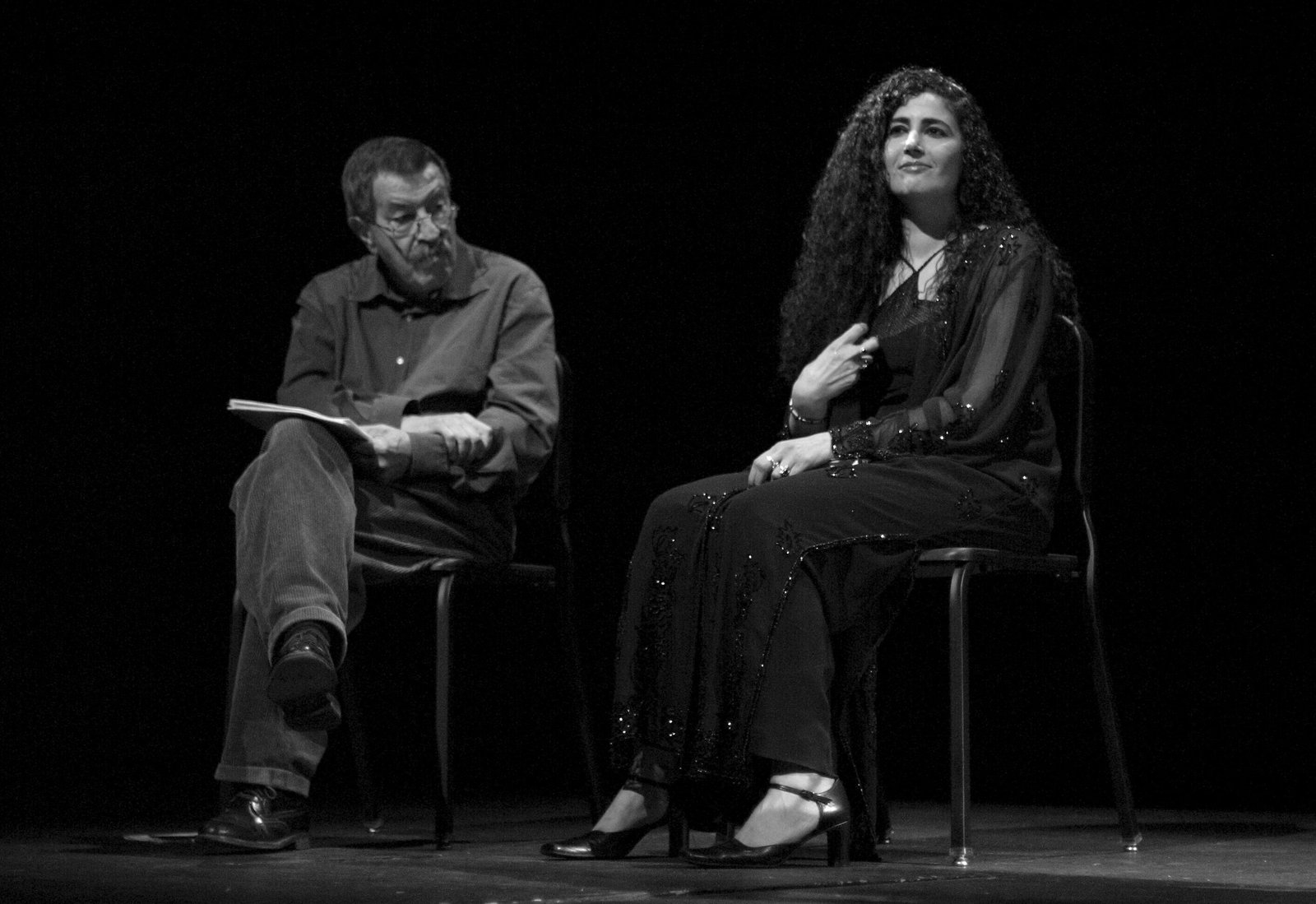
When the guns speak, the muse is not silent. She transforms silence into testimony.